https://www.listennotes.com/top-podcasts/john-banville/#episodes
he says any art that is any good is inexplicable
qhttps://www.bbc.co.uk/sounds/play/m001zv3s
Brian Cox talking about his awe at being in the rift valley where human life first began
He talks especially about the power of the ‘crafting of something new’. The importance of the creationof something that did not exist in the world before a human made it.
How can we relate this the art – making – the impulse to make something that did not exist in the world befor the human made it
Active
Patricia Oxley-wakefield
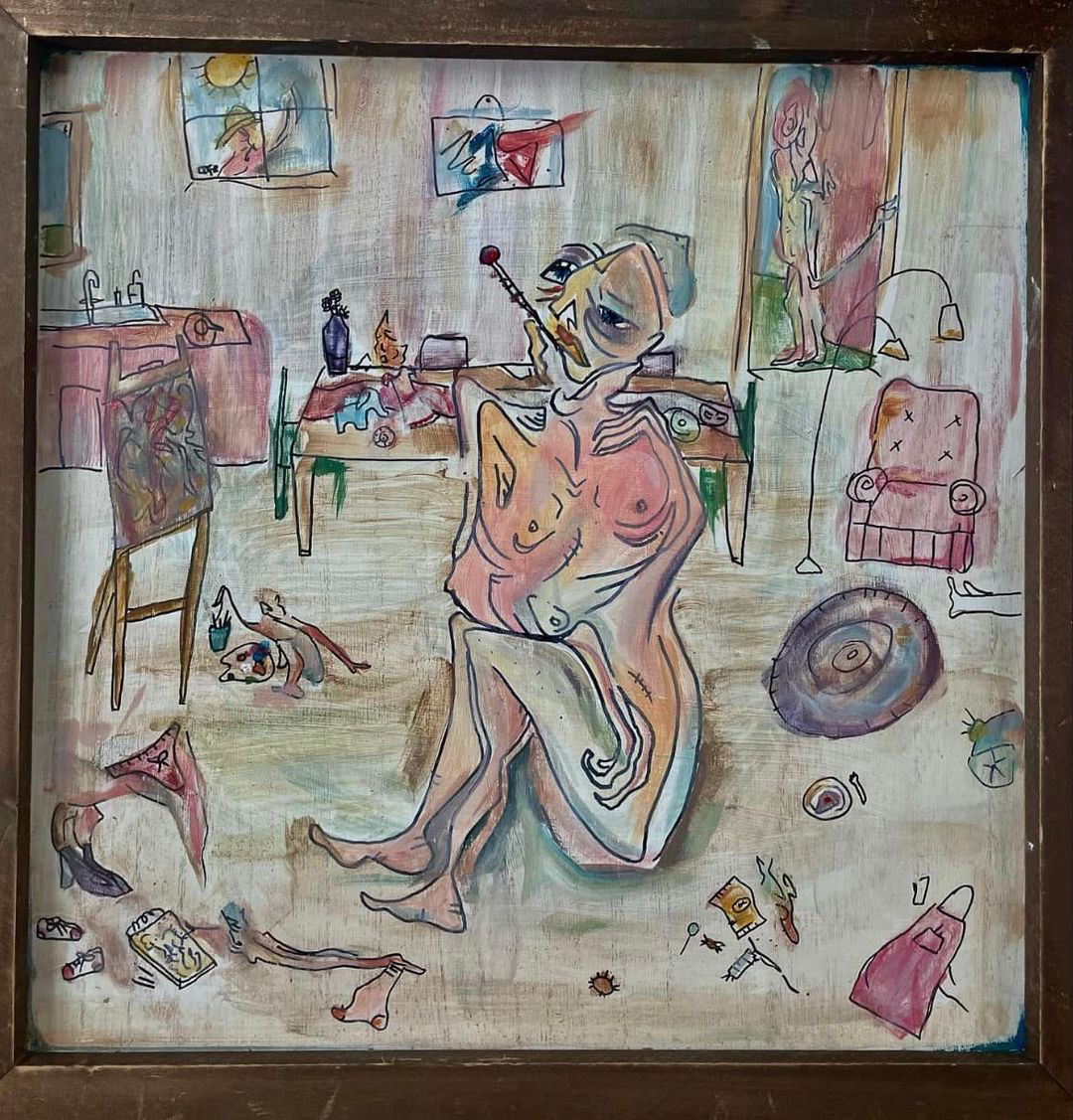
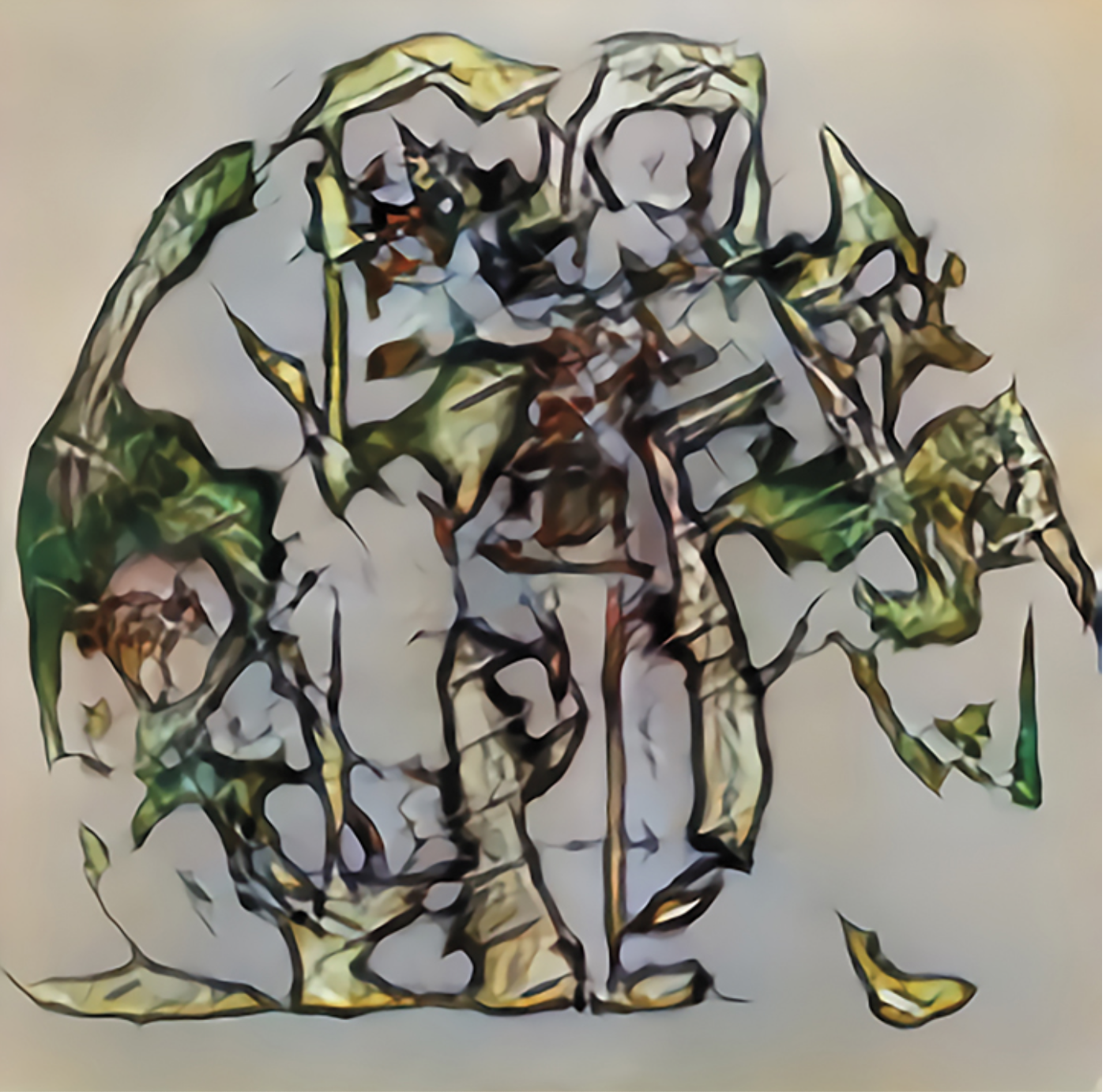
I like this. It keeps me looking at it – all the different bits that you have to refocus your eyes to see because they are smaller than the central image. Aha memo to self – that might be one factor in how we assess whether a piece of work is ‘good’ or ‘less good’. It might be to do with whether the piece keeps our attention and perhaps engages our brain (refocussing – paying attention and focussing may have had adaptive qualities in our evolution) This one does and so it ticks that box. I will shut up now
contrast, rhythm, balance and proportion: universal principles of organic and
aesthetic creativity.
Peter D. Stebbing
Hochschule für Gestaltung
This is important to me )Pat) because of the notion of ‘exaction’ or ‘preadaption’. I have not read the article yet (title of obituary)
the article seems to relate aesthetic responses of pleasure and desire to keep looking to evolution. I think exaction is to do with a particular response which becomes removed from its original stimulus and its original adaptive function but remains as a response with its rewards? does that make sense (also in obituary)
This investigation began in 1984 in response to students’ questions concerning the
reasons for the significance of visual rhythm (pattern) and balance and other basic
organisational principles of visual composition (aesthetic form) in graphic design.
The subsequent research has led to a theory that these basic principles are appealing
to us because our perceptual sensitivity originally evolved to recognize visual rhythms
and balances, etc. since these organizational principles are indicative of life forms,
whose recognition is essential for our survival. Consequently, our sense of aesthetic
composition could be an exaptation (or was ‘preadapted’) from our ability to
recognize the diversity of organic forms. Furthermore, our organic-form-recognitionreward
system may have provided us with the basis for our aesthetic appreciation. It
is anticipated that neuroscience can help us to achieve a deeper understanding of
aesthetics, for example, the evolutionary association which may exist between organic
form recognition and our perception of visual composition and aesthetic form.
https://betterknown.co.uk/better-known-2/listen/
Justine says this:
‘they are talking about film and the interviewer asks if some particular films made by a female Russian filmmaker are accessible. Waddell replies ‘Absolutely the interesting thing about a classical film classic books a classic piece of music, when things kind of tiptoe towards being works of art they become enormously accessible. there is something about the truth of a film or a piece of music that makes it accessible to anyone and particularly now when there is so much stress and strain around relations with that part of the world it’s really really important to be accessible to art from the region.
So much here that is undefined. What is meant by ‘accessible’? does it mean ‘liked’? what is ‘a work of art’? what kind of process/hierarchy? is meant by ‘tiptoe towards’?
I picked up this reference from Simon Woolham’s intro to his PhD thesis. And I ‘picked up’ Simon Woolham from sending him a proposal for a forthcoming symposium online run by Huddersfield University and I picked up the news of the symposium from the DRN forums and I picked up the DRN network as I wanted to see whether Helen Birch was still posting on there. And Helen Birch is part of my past one of the ‘buladh lei’ crowd.
Freud seems t have a bad reputation nowadays. But I find what I have read of his work to be really enlightening about how life is. eg civilisation and its Discontents’.
I wanted to see if the Remembering and repeating might reveal something about my painting habit and about drawing. There are things in common with what SW says about drawing, and narrative and this quote from Remembering has connections with Schiller’s spielraum.
‘The main instrument, however, for curbing the patients’s compulsion repeat and for turning it into a motive for remembering lies in the handling of the transference. We render the compulsion harmless, and indeed useful, by giving it the right to assert itself in a definite field. We admit it into the transference as a playground in which it is allowed to expand in almost complete freedom and in which it is expected to display to us everything in the way of pathogenic instincts that is hidden in the patient’s mind’
painting, drawing, dreaming, story telling, talking out repetition rumination, externalising (got to read that French book) are they all connected as some kind of ‘righting’ mechanism to ensure proper functioning of the person?
ACADEMIA Letters
1 Randomness in Generative Art: Drawing Like a Person
James Parker, University of Calgary
2 THE PROBLEM OF IMAGES: A VIEW
FROM THE BRAIN-BODY*
3
The Arts are More than Aesthetics:
Neuroaesthetics as Narrow Aesthetics
Steven Brown and Ellen Dissanayake
Neuroaesthetics: The Cognitive Neuroscience of Aesthetic Experience
Arts
How Art Is Appreciated
Helmut Leder, Gernot Gerger, Stefan G. Dressler, and Alfred Schabmann
Online First Publication, December 12, 2011. doi: 10.1037/a0026396
What makes good art criticism?
Janice Mills, Charles Sturt University
 isitartdotco